Tuesday, October 19, 2021

The New Safe Haven: Commodities

Bonds and gold used to be the safe havens in a sane fiscal policy world, where deficits were still considered bad.  Now, deficits are ignored, and fiscal policy has been off the rails since Trump's tax cuts got passed 4 years ago.  At first, there doesn't seem to be any consequences from the massive fiscal spending, but these things work with a lag, and are cumulative.  The first couple of years of big budget deficit spending + tax cuts don't have  much of an effect on inflation, but then the economy gets saturated with dollars and everything goes up.  Both paper assets and hard assets.  

But paper assets have been receiving all the investment flows since 2008, and commodities markets have mostly been ignored and investment in new production for energy has been mostly absent since 2015.  Shale oil production looks to have peaked out and it was never going to be a long term solution for oil supply.  There just aren't enough shale oil reserves to make up for the decline in conventional oil supplies outside of OPEC.  And even OPEC doesn't seem to have much spare capacity seeing how sparingly they are increasing production, and several countries are actually unable to produce up to their increased quotas.  

If it wasn't the possibly worst seasonal time to be long oil, I would have already dumped my SPX long and gotten long oil, even chasing the strength.  Commodities are the only market where I can picture a big move higher in 2022.  I can't picture bitcoin or any stock market that could match that strength.  Its been years of underperformance for commodities and they have been overshadowed by the big gains in the big cap growth stocks and speculative playthings like bitcoin, meme stocks, NFTs, etc.  

But the last 2 months of massive outperformance by crude oil and natural gas have given us a preview of things to come in 2022 as economic normalization and increased air travel will increase demand at the same time that OPEC added production will likely be less than what's needed.  We forget how inelastic energy demand is until you see a natural gas spiking higher on low inventory levels.  Crude oil demand destruction is one of the most overhyped and misunderstood concepts, because too many assume that the price of gasoline has an effect on how much one drives.  Most people drive out of necessity, and less for leisure.  The first is very, very price inelastic.  The second, leisure, is relatively price inelastic because most of those that travel have plenty of excess savings, and an an extra dollar/gallon of gas is not going to change their plans.  

In 2008, when crude oil went up to $147/barrel, there was very little demand destruction.  In 2021 dollars, that's probably close to $250/barrel.  Its laughable when people talk about demand destruction at $100/barrel.  Which was were crude was trading at from 2010 to 2014.  There was no decrease in demand at those prices.  

In a world where money is increasingly used as an opiate for the masses, the side effects of excess money are naturally going to follow.  Governments printing money to solve short term economic problems leads to debasement of the currency and long term inflation problems.  Instead of shaving and reducing the size of silver coins, they will just print more money and try to brainwash the public into thinking inflation is transitory.  

The best way to play this environment is to be long commodities, in particular those with constrained supply growth like crude oil and natural gas.  The metals and grains should do ok, but the supply is more resilient in those markets than in energy.  In any case, I see a supercharged commodities markets for the next 3 to 5 years, similar to the 1999 to 2008 commodity supercycle.  When they look back at this period, they will say that the commodities supercycle started slowly at first in 2016 and was at its peak in 2022 to 2024.  I know how ridiculous some of these commodities targets sound, because people have heard so much nonsense, especially from gold investors who nonchalantly called for $5000 gold in 2010 and 2011.  But $200 oil seems ridiculous to most people, but its a reasonable target by 2024.  Even at $200 in 2024, on a true inflation adjusted level (not the CPI garbage that they spew out), it would be similar to $120 oil in 2011, which no one thought was outrageous at the time.  

The best inflation hedge is investing in a hard asset that hasn't been driven up excessively by speculation.  Real estate used to be a great inflation hedge but for most countries, low interest rates have made real estate historically expensive, especially in Asia.  Stocks also are a good inflation hedge but the valuations have gone up so high by speculation, that it makes it a much worse choice to protect against inflation than commodities.  It seems investors are finally catching up to the attractiveness of commodities over the past few weeks, although there is still a lot more love for stocks than commodities.  There is still plenty of room on the commodities bus, as most investors are still riding the equity bus which is overflowing with passengers.  

SPX making one its patented burst higher from oversold conditions over the past 4 trading days.  Still long most of my position, I did lighten up a bit on Monday, and that looks like it was a mistake.  I may have to bite the bullet and get back in anywhere close to SPX 4480.  It could chop here and pullback towards SPX 4450, or just keep powering higher to new all time highs.  I give both an equal chance of happening, so you gotta be long, especially before tech earnings next week, IMO.  After FOMC on Nov. 3, a lot of that wall of worry will be behind us and with it higher prices. 

Friday, October 15, 2021

Q3 Earnings and Return of Stock Buybacks

At the start of September, the stock market hardly thought about the supply chain, or the earnings for Q3, and really only worried about a Fed taper and a possible taper tantrum.  Debt ceiling wasn't really much of a thought and there was no talk about an energy crisis.  There was a little bit of talk about Evergrande, but nothing that investors thought would really matter for US companies.  After 45 days of a downtrending market with lots of volatility and choppiness, everything seems to be horrible.  

Most investors are worried about inflation, and what that will do to bond yields, and how it affects Fed policy.  They are worried about how the supply chain problems will lead to lower earnings estimates and higher inflation.  They are worried about the energy shortages in China, the rising price of commodities feeding into inflation.  The wall of worry is high.  But at the same time, investors have been conditioned by the numerous quick rebounds off dips since spring of 2020 and don't want to miss the bottom.  Thus there are two countervailing forces, the worries vs the greed of wanting to catch the bottom and riding the market higher like previous V bottoms.  That is what gives you the chop that we've seen between 4300 and 4430 since the end of September.  

As I write, it seems we've broken that chop range to the upside, but I have little confidence that it will be a straight shot higher to new all time highs.  But I am staying long, because while I don't think the path will be smooth to new all time highs, I do believe that is what will happen over the coming month.  We could see another move back down towards 4390-4400 next week after today's opex, and ahead of tech earnings, which now seems to be more feared than embraced.  But I will stay long, because I don't want to lose my position if the market just keeps going higher and doesn't chop back down.  That's a path that's very possible, even if its not the most likely one.  

You have to average out all the different paths that the market will take and make the right decision.  And even at these levels around SPX 4460, the missed profit of losing my position and missing the ride up to new all time highs is greater than the opportunity cost of not being able to buy a dip back down to 4400 because I am heavily long.  Maybe if I see more signs of a short term swing top, I may reduce 1/3 of my position, but I want to keep a core regardless.  The seasonality is too favorable and the earnings season now seems like a sell the rumor, buy the fact event, especially the tech heavy earnings week from Oct. 25 to 29.  I can picture a little dip next week, only to see another big rally the week after.  And into the FOMC meeting on November 3, which is an event that is considered a bear catalyst, but likely will serve as springboard for lower VIX due to the event passing and reduced uncertainty which should bring in the last of the sidelined equity investors coming back in to put money into this market.  

There is a seasonal tendency during earnings season to see the S&P 500 selloff a couple of weeks before bank earnings, and then make a big move higher right before most of the tech companies start reporting.  This month, that period would be from October 25 to October 29.  That also coincides with the end of the stock buyback blackout period.   As you can see below, November is historically the heaviest buyback month, which should support the SPX.  Also, it has seasonally been one of the strongest months of the year.  

Another chart which supports the bullish case is the Squeeze Metrics Dark Pools Index (DIX), which is a smart money indicator, measuring short sales in dark pools.  The higher the short sales, the more bullish it is for the market going forward.  Its been trading high for the past several days, and especially this week, despite a strong rally, which is unusual.  The last time DIX was high as the market rallied was in mid July, which resulted in the market grinding higher to new all time highs almost every day for the next 40 days. 

As for the bond market, its a tough trade right now.  Ahead of the Fed taper announcement in November, investors will be reluctant to buy bonds, so I am hesitant to get long.  At the same time, most are leaning short, so I don't want to get involved in that negative carry crowded trade. 

Tuesday, October 12, 2021

Everyone Has a Plan

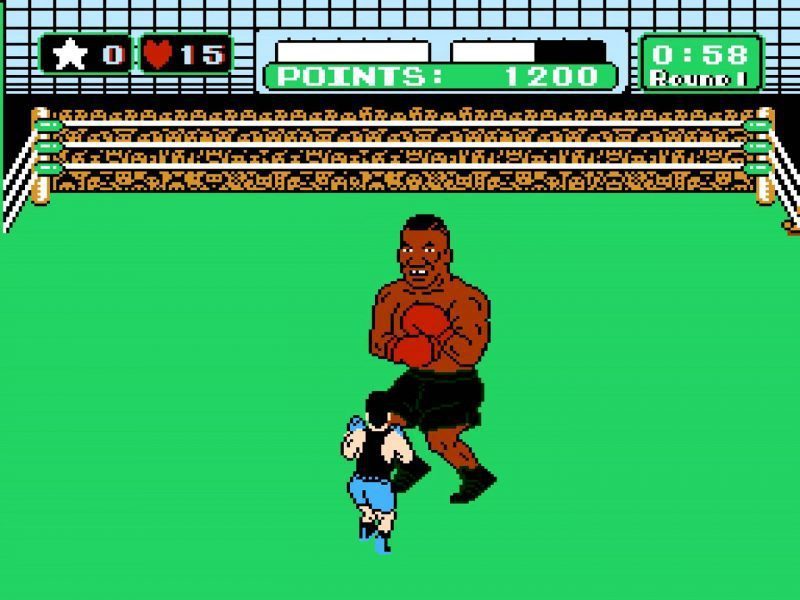
 "Everyone has a plan until they get punched in the face" (or bit in the ear.) - Munchin' Mike Tyson

The moves in recent weeks are uncommon in a bull market.  In strong uptrending environments, it is not common to see such an extended pullback.  Its been over a month since the market was at all time highs, and for most of that time, in a downtrending channel. They are common in bearish environments, but not bullish ones. 

So does it mean the uptrend has now turned into a downtrend?  Its possible, but considering the fairly small SPX drawdown from all time highs, and its relative strength vs. other global equity indices, I am leaning to a bull market until proven otherwise for longer.

Its been a tough environment for mean reversion traders, and those that follow historical patterns.  Looking on the bright side, if the market always followed historical patterns and statistics, then all the patterns would change as systems traders front run trades and that itself would change the patterns, making them harder to time.  

The unpredictability and luck factor are what keeps everyone on their toes, it keeps any one group of traders or investors from totally taking over the whole market.  But I'm sure that will change with the advance of technology and AI.  The days of discretionary trading big macro moves becoming so tough that its not worth it are not too far ahead in the future.  Already, FX is almost untradeable.  I could definitely picture a day when equity index futures and Treasuries follow suit, and become just as untradeable.

Everyone can trade well when things go as one predicts, while making money.  Most of the alpha is generated in dealing with the drawdowns and when the market makes unexpected moves.  Knowing when to hang tight and when to reduce risk is what separates the winners from the losers.  Its the toughest part of trading, making the right decisions when losing money.

This market is not scaring them out, but wearing them out.  Its jab after jab after jab.  Not many knockout punches, but stiff jabs over and over again.  Yesterday was another one.  It feels like endless chop and the market can't sustain a rally.  It feels heavy, and its slowly turning overconfident bulls into reluctant bulls and even into reluctant bears.  

I remain long, but don't have any plans to add any more.  The SPX has worn me out.  The probabilities still favor the long side, but they are going down with each passing day of more chop between 4300 and 4400.  The wall of worry is quite high: inflation, supply chain worries, China, central bank tightening, bond yields, etc.  It appears that fund managers are taking down risk ahead of this earnings season and the upcoming Fed taper.  Hedge fund equity long exposure is still above average levels, but its come down over the past 2 weeks.  The put/call ratios have remained near the upper end of the 2021 range.  Slowly, the positioning is coming down to levels where we can sustain an extended rally phase again, perhaps for the next 2 months. 

With October almost halfway done, the seasonally weak period is almost over and the buybacks can't come back fast enough for the bulls.  Its just grin and bear it time for the longs here, waiting for the storm to pass.  Looking at charts doesn't help anymore.  Reading the news is repetitive and talking about the same things over and over again.  Its just discipline, risk management, and following the game plan now.

Thursday, October 7, 2021

Debt Ceiling Worries

Did the market really selloff yesterday because of the debt ceiling uncertainty, and recover because McConnell caved in and agreed to a short term deal?  Worrying about the debt ceiling is the epitome of very short sighted thinking.  They have never failed to raise the debt ceiling.  Its about as near a certainty as the sun rising in the east.  The US government, with a spending problem, will not shoot themselves in the foot and take away their own credit card.  They don't need to mint a trillion dollar coin.  They can just do whatever they did in the past, and if not, there is always reconciliation, the easy way out of doing what you want without having any bipartisan support.   Not raising the debt ceiling is like a gambling addict going to the casino and putting himself on the voluntary no entry list.  Eventually the guy will find a way to gamble, if not at that casino, online or at another casino.  Or maybe the guy just binge buys a bunch of lottery tickets.  

What we saw from last Thursday to this Wednesday was a U bottom.  Its rare these days, and something people rarely talk about, because with all of the liquidity and predatory front running HFTs, you usually get huge flush outs from front runners forcing liquidations and running stops, taking markets too far down, so there is a slingshot effect.  Since there is always so much liquidity, the market roars back higher, just as fast as it went down.  Some examples of U bottoms are August 2010, June 2011, July 2015, August 2017, April 2018, August 2019, and if the market keeps rallying, Sep/Oct 2021 will be added to that list.  

U bottoms are characterized by markets that have support at lower levels, and lack the forced selling and liquidations which result in V bottoms.  Shaking the tree through time and choppy, volatile price action rather than capitulation. 

The first sign that a U bottom was possible was the sharp rebound on Friday unexpectedly (in my view) after a nasty overnight purge lower towards ES 4260 after the weak Thursday Sep 30 close.  I am sure some of that post-close weakness Thursday was delta hedging by dealers and those that were front running that because a big JPM fund put on a huge put spread paid by selling OTM calls on Sep. 30.  It was a chunky delta negative position, which was hedged for 1 day when the fund bought a in the money same day expiration SPX call to delta hedge their options position, basically kicking the can on the hedging from intraday Sep. 30 to the close and the overnight market.   So dealers had to hedge on a huge SPX short put spread position right at the close. 

Usually this quarterly trade isn't a market mover when markets are in an uptrend, but when markets are nervous, and their call that they sold the previous quarter finishes out of the money, then the position tends to cause a big short term ripple in the market.  

If Friday and Tuesday showed you that there was underlying demand for stocks below 4300, Monday and Wednesday showed you that there were still too many bulls looking for a quick rebound (as did that @hmeisler investor poll), and they were punished chasing strength on Friday and Tuesday.  But usually after 3 of these up and down cycles after an extended selloff, you have usually worn out all but the hardiest of bulls, and that provides the base for a strong rebound.  

Plus, despite a month long selloff, the SPX only sold off 5.3% from the peak on a closing basis.  That's just not going to do that much technical damage considering how strong the uptrend has been this year.  This month long selloff couldn't even get down to the July lows on a closing basis.  

But what I did learn about this market is that stock investors are quick to be bullish, and reluctant  to get bearish for long, even in the face of a lot of bearish news.  They have learned their lesson from the brief selloffs and strong V bounces since March 2020, and now conditioned to not fear down days, but look at them as buying opportunities rather than as a sign of weakness.  That might not mean much now, but its not a good sign for the longer term prospects for the US stock market. 

We got a big rally supposedly because of the debt ceiling "deal", but I think the market was looking for any catalyst to make a bottom and start the recovery from the month long pullback.  I was a bit worried that I missed my opportunity to add more longs by not buying on Monday, after seeing that strong Tuesday rally, but was relieved to see the gap down on Wednesday and was able to add long exposure at decent levels.  I plan on holding these longs for a longer term swing trade, maybe until mid November. 

Tuesday, October 5, 2021

Sticky Bulls

That's what a 20% rally from the start of the year does to investor psychology.  Remember, most investors use the rear view mirror when they trade.  That 20% rally which was relentless with every small dip being voraciously bought left a searing memory into the psyche of most investors.  They now don't think the market can stay down, and that even big dips are not a sign of a change in the market, but just a buying opportunity, a bump in the road to higher prices.  The Twitter poll run by @hmeisler had a repeat from the week prior, with bulls much higher than bears.  

I was a bit shocked, just because last week, the SPX traded much lower and only was able to put in a last minute rally on Friday afternoon, which obviously got investors bullish.  It tells me that investors are still very quick to get bullish in this market.  

The equity volume on the exchanges was mediocre, and it didn't seem like too many were anxious to make trades yesterday.  It appears that the bulls are mostly satiated with their dip buys, not really willing to put more money in at this time, but not willing to cut losses on recent purchases.  Also, it doesn't seem like too many are worried during this selloff, you aren't seeing the elevated put volume that you normally see after 4 weeks of a down market.  That worries me a bit as a dip buyer, it doesn't change my view that there will be a strong rebound once the bottom is hit, but it does make me wary of more selling in the coming days as there seems to be limited stop loss selling or capitulation.  

The explosive move higher in crude oil despite stock market weakness is a definite burden for the bond market, and thus, a negative for stocks, by collateral damage.  Anything that reinforces the notion that inflation will be high for longer will hurt stocks.  Reinflation is no longer welcome.  

More and more, this market is reminding me of October 2014, when after over 3 years of a steady uptrend, you finally got investors into a very complacent mindset leading to a sharp drop and an equally sharp rebound, which presaged an extended topping phase in 2015. 

Treasuries continue to be a tough trade, with FOMC meeting in November and higher energy prices as negative factors.  I don't expect a 2018 style bond market rout mainly because I doubt that the Fed will be able to go on an extended hiking cycle with how fragile the stock market will be from 2022.  And let's not confuse the current Fed with those from anytime pre 2008, and even pre 2020.  Inflation is just not a big factor in their decision making, no matter how much everyone talks about it.  The Fed's priorities in order are:  1) Stock market 2) Employment 3) US growth 4) Bond market 5) Inflation  

And the Fed wants all of them higher, except inflation, but they are willing to tolerate high inflation, but not a weak stock market, labor market, or growth.  So higher energy prices will not be a factor in Fed policy.  Just like the Fed ignored higher energy prices when cutting rates in 2007 and 2008.  

Being patient on adding more equity exposure, I am underwater on last week's purchases so would like to see some more fear out there before I add more.  We've had a lot of gap up and fade moves and that speaks to investor optimism.  Usually when investors are pessimistic, you see many more gap downs.  A big gap down that scares the crowd would go a long way towards making a bottom.  Thought that would happen last Friday but they brought it all the way back up. 


Friday, October 1, 2021

Going Down the Hole

It is looking bleak out there.  Futures gapping down after breaking last week's lows and below the key SPX 4300 support level.  Next psychological support level is 4250, and there is a open gap at 4258.  With the September selloff, we've backtested some significant trading levels (4420, 4350, 4300).  If you get some real panic selling, 4200 could be tested, but that is where the market lingered for quite sometime in April and May, so there is strong support at that level.

For the positives, you are finally getting some heavy put buying, as the ISEE call/put index shows.  Not just one reading under 80, but 3 times over the past week:


 Despite Thursday's selling, VIX didn't break out to a new high, and it closed lower than Tuesday, when SPX was 50 points higher.  SPX has made a lower low and VIX has made a lower high. 


For the negatives, the hedge fund CTAs are still very long this market, as regression data from the HFR CTA Index with the SPX is highly correlated.  Also, you still have negative seasonal effects at this time of the year, with stock buyback blackout in effect for the next few weeks, and volatile October seasonal patterns.  Don't forget that going into this week, according to that popular Twitter poll I mentioned on Monday, the dip buyers were still too bullish.  This week has gone a long way towards changing that, so we'll have to see how the FinTwit crowd reacts after this week's selling. 

I am still long, and early, but have dry powder to scale in more longs at these levels.  This will be for a longer term swing trade.  The uptrend is intact, but this selloff gives me more confidence that 2022 will be the year the SPX goes into a topping phase. If we do recover to new all time highs later in the year, don't forget about the price action this September.  Like February 2007, March 2011, and August/October 2014, a sudden, and deep sharp drop from a well established uptrend is a warning sign that the uptrend phase of the market is getting closer to the end. 


Wednesday, September 29, 2021

Fiscal Policy in the Future

Recently, we've had the government in the headlines, with the debt ceiling approaching, government funding deadline at the end of the month, and the infrastructure bills being negotiated. 

Here is what gets investors in trouble.  Looking in the rear view mirror to try to predict what will happen in the future.  Especially when that rear view mirror only sees what happened in the past 2-3 years.  You need to look in the rear view mirror but put everything into context and have a rational perspective on trends.  

For example, the consensus view on fiscal policy is that it will be expansionary with growing budget deficits and huge fiscal stimulus far into the future.  An outlier event in 2020 has everyone thinking that the Covid policy response will be what fiscal spending looks like going forward.  Yes, the budget deficits will be big, but not as big as many expect.

You just happened to get the 2 most potent combinations for massive fiscal spending over the last 5 years:  1) First term Republican president.  2) Democrat president with both houses of Congress controlled by Democrats.  Those are the two combinations that lead to the most government spending for the following reasons:

1) A first term Republican president wants to keep the economy strong in order to get re-elected, so he wants tax cuts and increased government spending.  In the first half of Trump's presidency, he had a Republican majority in both Houses, allowing him to pass big tax cuts.  In the second half, he had a Democrat majority in the House, which led to big spending bills during the pandemic.  Democrats always favor more spending, especially Democrats in the House of Representatives, who have 2 year terms.  That forces a compromise on any spending deals to include tons of extra spending and Democrat lobbyist pork.  

2) A Democrat president with both houses of Congress is the most lethal combination for extraordinary government spending.  It is rare, because Republicans have a built in advantage in the Senate races because there are more Republican states which have a Republican majority voter base than Democrat states.  This due to rural states which are overwhelmingly Republican, and even if the population is low, they still get 2 Senators each.  Of course, Democrats prefer spending more than Republicans, but contrary to past Democrats, are less zealous about increasing taxes to fund increased spending.  This leads to huge spending bills funded by Treasury issuance which is bought by the Fed, basically MMT. 

However, starting from 2023, after the midterm elections, you are likely to see this change.  Like all past midterms, the party that is NOT in the White House is hugely  favored to win at least one of the Houses of Congress, due to voter motivation effects.  That means that Republicans are almost guaranteed to win either the House or Senate, or both.  That basically puts an end to Biden's profligate fiscal spending as a Republican majority in Congress will not sign off on anything to help the economy ahead of the Presidential election in November 2024.  

Suddenly, the consensus view of massive fiscal spending for years and years will be invalid, at least for 2023 and 2024, and perhaps even longer if the Democrats win the Presidency in 2024 and Republicans win at least one of either the House or Senate, which is likely, given their built in advantage in the Senate races.  In that case, that would be a repeat of the Obama years from 2010 to 2016, where fiscal budgets were constrained by Republican majority in Congress unwilling to sign off on more spending.  

Back to the market.

I am now hearing 1. rising yields, 2. debt ceiling uncertainty, 3. technical mumbo jumbo, and  4. Chinese power issues/Evergrande 5. supply chain worries as reasons to be bearish.  I agree about the rising yields, but none of the other issues.  And the stock market doesn't continue to sell off on rising yields unless it gets out of control like it did in 2018.  Not even close to that type of situation.  Debt ceiling will be raised, as it always has.  Technicals tell you what happened, not what will happen.  The more people that are bearish on the technicals, the better the buy set up.  Chinese electricity shortages are actually bearish for commodities not, stocks.  If factories can't run at full capacity, that reduces the demand for raw materials.  China has a much smaller effect on the US stock market than the commodities market.  Lastly, the supply chain issues that everyone talks about is primarily due to overseas Covid restrictions, which will go away eventually as cases go down and once governments realize that their policies are useless and doing more harm than good.  There is a shortage of labor, but some of that should be relieved with the expiration of unemployment bonuses.

We got the selloff that I was looking for, taking the SPX down to the Sep. 20,21 closing levels around 4350.  Thankfully giving those holding cash another buying opportunity.  I am basing my shorter term trading off longer term time frames and its still in the uptrend phase.  We are in the late stages of the bull market, but not the final stage in my view.  The 4300-4350 zone is turning into support during this consolidation phase.  In the short term, I expect more chop between 4300 and 4480, perhaps up to 2 weeks more.  After that, we should see a resumption of the uptrend as investors should reclaim their greedy view of the market, after taking a much needed break in September to refuel. 

With stocks up so strongly this year, fund managers will be motivated to keep up with the averages and I expect them to chase this market higher in November.  Much like September, investors fear October, but with the September pullback, its a much worse set up to follow seasonal patterns and expect October to be weak.  I took a partial long in SPX, looking to buy more in the coming days in the 4300-4350 area.  Although unlikely, I won't rule out an overshoot to the downside towards 4250.  If that move happens, I expect it to be brief and immediately lead to a panic low and V reversal. 

On the bond market, I've been too sanguine on the tapering fears.  I was surprised by how explicit and eager Powell seemed to get tapering started in November.   Its actually not the taper, but the pricing in and timing of rate hikes due to the taper that is causing yields to rise.  Now we know that rate hikes are on the table in late 2022.   Contrary to what a lot of bond "experts" say, a Fed signaling a taper and indirectly signaling a timing for rate hikes is not bullish for the long bond.  At the beginning of any tightening cycle, the long bond suffers the most because that's where there is the most duration risk.  People assume that a Fed rate hiking cycle will slow down growth and potentially lead to a recession, keeping 30 year yields lower in the future.  That's old fashioned thinking.  It doesn't work like that anymore.  We've got to change frameworks from the pre-2008 bond market to the Japanized bond market.  Rate hikes will be limited, if they happen at all.  Monetary policy is now mainly transmitted further out on the curve, because when you spend most of your time at zero Fed funds rate, but investors still fear future rate hikes, they move yields 3+ years out on the curve.  

A hawkish Fed is not bullish for the long bond.  If I owned 30 year Treasuries, I'd rather have a Fed that signaled that it would keep rates at zero for a long time than one that threatened rate hikes.  There is a limit to how steep the yield curve can get when Fed funds rates are constantly kept at zero.  This keeps the 30 year Treasury yields contained.  People are not complete idiots.  They eventually figure out the pattern and price in zero rates for longer and longer periods of time into the future (e.g., Japan, Europe).  

Treasuries are a tough trade here, tough to be long with the November Fed meeting still ahead and a likely tapering announcement, but it seems like so many are leaning short in the market and its already sold off quite quickly in the short term, so don't think shorting is the play either.  Plus, negative carry makes it harder to profit on the short side except for very short term trades. 

Monday, September 27, 2021

Stocks Getting All the Love

They love stocks.  You get the fastest gains in the latter stages of a bull market.  Despite all the quant funds, robo advisors, and systematic strategies, humans are the ones behind the controls.  Human nature has not changed.  Greed rears its ugly head after several years of a bull market.  Envy is a powerful force, you can be rich and holding plenty of cash and be dissatisfied with your situation when you see your neighbor bragging about all the money he's making in stocks, while you make 0% in cash.  

Fear takes a backseat when the market has gone up for 12 years, with only intermittent corrections and "bear markets", which have been more like deep corrections that completely recover within a few months, not years.  You can't really consider 2011, 2018, or 2020 as bear markets, when the market went down 20%, but didn't stay down at those levels for more than a few days.  They were more like flash bear markets than a real bear market. 

So we've built up a psychological base of rock solid bulls, who will not be easily scared or deterred from buying the dip.  That's what happened last week, as the fear lasted all of 1 day, and then greed took over and when people get greedy, they are willing to pay higher prices and quickly.  

There is a popular weekly poll asking about the next 100 SPX points.  Here are the results from Saturday:

I was a bit shocked at the quick turn in investor sentiment based on the past week of trading.  Yes, we made a bottom on Monday and kept going up all week, but SPX is still well below the highs made in early September.  It shows you how quickly investors turn bullish at the first sign of a bottom.  FOMO is in full force.  

It seems like even 5% corrections can't get investors bearish for long, maybe for a day or two, before they get FOMO and start calling bottom when they sense a trend reversal.  Unlike the previous V bottoms, you actually had a longer downtrend and a deeper pullback, despite investors staying tenaciously bullish for most of the way down.  Maybe they are right and they've figured out the V bottom pattern and know that there are no retests and it always goes straight up to a new all time high.

Don't feel comfortable chasing the rally when I see this kind of complacency so quickly.  Yes, it eventually will go to another all time high, but a much better setup would be to get more put protection being bought, some more consolidation at the 4300-4450 zone, to build a better base before making another rally.  The up trend has been so steep in 2021 with almost no base building that its getting dangerous and more vulnerable to a February 2018 style sudden plunge.   

The bond market has been weak since the FOMC meeting, and all things equal, a weaker bond market is a negative for stocks.  The February 2018 plunge happened as 10 year yields were rising strongly.  The stock market tops in 2000 and 2007 coincided with rising bond yields that topped out at the same time.  The big drop in August 2015 was preceded by a weakening bond market from February to June that year.  

That being said, you have to deal with the market that is here, not the market that you want.  No one forces you to make a trade.  Cash returns 0% but it does give you optionality and flexibility to take advantage of sudden opportunities.  There is a value to that which is underestimated.

On Evergrande.  It seems most 5 minute macro experts are missing the point.  Its not about contagion or systemic risk.  Really, there is no systemic risk anymore because we all know that if things get bad, the central bank will ride to the rescue every time.  Its about the economic damage that happens during that process which leads to eventual central bank rescue.  The financial crisis in 2008 didn't happen because they didn't save Lehman Brothers from going down.  Don't confuse cause and effect.  

The cause of the financial crisis was not Lehman Brothers, it was the excessive household debt that was built up in the previous years as real estate speculation went overboard.   Lehman Brothers bankruptcy was just the result of years of speculative excess and household debt accumulation that was unsustainable and eventually blew up the market.  

Evergrande is the same thing, but its more like Countrywide in 2007 than Lehman Brothers in 2008, because we're still early in the Chinese real estate down cycle.  First the most important point:  China has built up the biggest property bubble in world history, with way too much inventory and speculation.  It makes the US real estate bubble in early to mid 2000s look like child's play.  China is now trying to tackle the problem instead of just ramming more debt down the throat of the system, seeing if it can swallow it.  That is causing convulsions in the fragile market.  But they want their cake and eat it too.  They want to de-leverage the property sector but also keep house prices stable.  You can't have it both ways, unless you put in price floors, which is possible given their heavy handed style.  All that would do is kill almost all real estate transactions, making them into totally illiquid assets, which would bring on another slew of unintended consequences.  

Probably the most likely scenario is that Chinese property prices start going down in 2022, the economy gets weaker, and China can't take anymore pain and decide to do RRR and interest rate cuts to keep the market from going into a full blown crash.  Real estate to China is like stocks to the U.S.  It is the most important asset class.  If real estate prices go down, the negative wealth effect will lead to a much weaker Chinese economy, in addition to the slow down in construction and property related sectors, which are a big part of Chinese GDP. 

Friday, September 24, 2021

Reopening Trade = Value Trade

The most consensus opinion I hear in the financial media and individual investors is being long value stocks and being in reopening trades.  Reopening trades are basically this:  financials, industrials, materials, and energy.  Mostly value sectors of the market.  Sectors that work better when interest rates are rising.  It worked from late fall to spring, but since April, its been badly lagging growth and the SPX.  

These reopening trades may work, if you see a lot of inflows continue to lift all boats, including value, and when the market is still optimistic about the Fed being able to hike a few times in the coming years.  But they are not a place to park your money if you think the stock market is overvalued.  

Value investors have this quaint notion that since their stocks are "undervalued", that they will go down less during a market downturn.  But these value stocks are the ones that are most economically sensitive, and the market usually goes into a downturn when the economy weakens, making these stocks the most vulnerable.  

I see this a lot among investors and its something that I fall into sometimes, and that is looking in the rearview mirror and extrapolating that into the future.  Since the economy was strong in 2021, and because the Fed is easy, there is still a lot of fiscal stimulus, blah blah blah, that 2022 will also have a strong economy.  Since the Covid cases have peaked, and are coming down, the economy will strengthen.  That's not an insight that provides any edge.  Its just looking in the rearview mirror and extrapolating it in the future.  

Contrary to the consensus view, fiscal stimulus is probably near the end of the road here in 2021, and you can expect 2022 to 2024 to be relatively light compared to what people expect.  Infrastructure spending will be spread out over many years and it seems like the spending number is getting negotiated down by Joe Manchin.  Its still more government spending than anytime from 2009 to 2016, the Obama years, but with the tax increases, its probably not much of a difference from 2017 to 2019. And without additional government spending, the growth will disappoint.  The United States is basically a socialist country now.  Without bigger budget deficits, economic growth will be low.  

There is no organic growth in the US anymore.  Population growth is too low and the population is getting older.  And the productivity growth is nonexistent.  With work from home and the abundance of newly formed daytraders, speculators, retired baby boomers who can now just live off of their assets (thanks to the 2009 to 2021 bull market), productivity is going to go down, not up. 

So the only drivers of the economy are fiscal and monetary policy, and monetary stimulus is near its limits with ZIRP and low 10 year yields.  Basically fiscal policy is the only thing that will move the needle for the US economy.  

I am not just being contrarian for the sake of taking the opposite view of the consensus.  Global M2 supply growth is slowing down, Chinese housing bust all but guaranteed to slow down their economy for the next 2+ years, and less government spending from 2022 to 2024 in the US, you are all but guaranteed to have disappointing growth going forward.  It doesn't mean the stock market can't go up for the next few months, but it means that earnings growth in 2022 will disappoint, and that will coincide with the stock market topping at the same time.  

So based on the above, I just can't picture Jerome Powell ramming through a rate hike into a slowing economy while the stock market is in a firm downtrend in late 2022, early 2023.  Unlike 2018, the stock market has gotten to be a much bigger part of the US economy, as every mom and pop and Robinhood newbie are loaded up on equities.  So the economic consequences of a bear market are that much bigger than they would have been even just 3 years ago.  So Powell in December 2022 will likely face a similar situation as Yellen did in September 2015, and that's see a weakening economy and stock market when they pre-signaled a rate hike.  Yellen decided to punt on that rate hike in September 2015 and got one in on December 2015 just to maintain a bit of credibility (on their pre-signaled hike), not because she thought the economy needed it.  Powell maybe gets through one rate hike during this cycle, but then its lights out for the stock market. 

I still expect higher SPX levels for the next few months, but the end of the road is getting closer and closer, as TINA investors have loaded up the boat with stocks, and they will be the ones who provide the downside fuel during the next bear market.

We have a gap down today after a face ripper rally that faded into the close yesterday.  I don't want to jump the gun and say that this doesn't feel like the other V bottoms that we had earlier this year, but the price action is definitely different than previous bottoms.  First, this pullback is much deeper than the previous ones this year, yet the complacency (other than Monday) remains, as I am seeing so many call the all clear sign after yesterday.  Market participants have been so well conditioned to buy the dip and expect a V bounce every time that I get this suspicion that the market will not oblige them so easily this time.  Second, we are still in seasonally weak time period of the year, ahead of Q3 earnings, and still at the beginning of the stock buyback blackout period that runs through the end of October, so the sellers still have some time to work on this market and take it lower.  

Treasuries got crushed yesterday, and we've broken the tight 1.22-1.38% trading range in 10 year yields to the upside.  I expect a choppy SPX for the next week or two, so I am leaning towards this yield breakout failing and expect 10 yr yields to go back down to the range that its been trading at since mid August. 

Thursday, September 23, 2021

Another V Bottom?

The strength off the Monday low has been immense.  And this on what most would consider a hawkish Powell at the FOMC meeting yesterday.  Its almost as if everyone has the same BTFD playbook, and once they feel that the coast is clear (FOMC meeting over), they all rush in at the same time and frantically buy with both hands.  Once I saw that opening 15 minute candle this morning, I knew it was lights out for the bears today.  You can usually extrapolate rising prices for the next 90 minutes off those first 15 minutes of price action.  When they are that aggressive pushing prices up straight off the open, you know those are motivated buyers willing to pay up and quickly.  

It's been V bottom after V bottom all year long, so now it seems most are expecting it.  That's why you get this kind of frantic buying at the open after the up day yesterday, and people not wanting to miss out on the fast and steady gains that always come after a V bottom.  


This could be another V bottom, we did get a lot of panic selling on Monday and put volumes were high, but if you get a V bottom here and hit new all time highs, the trend is a bit too steep and fast for it to be sustainable.  After the amount of rallying that has already happened in 2021, basically a straight line higher from 3750 to 4550 over 8 months, the market usually consolidates those kind of fast gains by going sideways for several weeks, but the fund inflows and FOMO is so intense that people keep rushing in regardless of the high levels and these sideways consolidations don't last, and it just keeps going higher.  

Since the market started trending lower after Labor Day, there was only one day where I sensed any kind of fear, and that was Monday.  Even last Friday, the selling seemed calm and traders weren't rushing to buy put protection.  And from Tuesday, its almost as if traders fear not being all in for another V rally more than they fear being all in during a big decline.  The greed factor is still very high, and that makes it hard to sustain a downtrend when everyone knows that you have to buy the dip.  

I didn't really take full advantage of that dip on Monday, so it would be nice if the market actually chopped around instead of going straight back up, but the market doesn't oblige traders, it does what it wants to do.  Its tough to chase here, because we didn't really flush out that many weak hands, they are all just clinging on waiting to sell after we hit new all time highs again.  

I'll just be patient, if it comes back down, I'll buy, if it runs away from me and keeps marching higher, like it has all year, then I missed it.  Its tough to be on the sidelines when everyone else is making money, but I'll wait for better risk/reward setups. 

Tuesday, September 21, 2021

Highest Put Volume of the Year

Monday could have been the bottom of this pullback, probability of around 30%. The put volumes were highest of the year, and the daily put/call ratio was the highest for the year. 

The price action was definitely panicky, as we haven't seen that kind of down move on consecutive trading days, ES 4460 to 4300, over 160 points.  

Stops were definitely hit, as there was quite a few dip buyers who got in early, not wanting to miss another V bottom.  But the signs of complacency last week were in plain view and wasn't what you typically see during bottoms, especially ahead of negative catalyst events: possible Fed taper, budget deadline, debt ceiling, tax hike negotiations, etc.  

Those events are still ahead, but at least you have taken out some of the complacency, stopped out a few weak hands, added some put protection, providing better risk/reward for longs.  

In strong bull markets, when you are still in the low volatility uptrend phase,  waterfall declines are rare, and even 5% corrections are much less common than most people think.  If they do happen, they are usually followed by new 52 week highs after bottoming.  

At SPX 4380:

Over a 2 day time frame, slightly favoring shorts, but not by much, since I am leaning toward weakness Thursday and Friday.  

Over a 2 week time frame, odds favor longs. 

Over a 2 month time frame, odds are heavily in favor of longs.   

Tomorrow is the much awaited FOMC meeting, where Powell is probably going to be dovish as usual, as he's still auditioning for reappointment and stocks have gone down recently.  I would use any rally on a dovish Powell to sell stocks and reload either Thursday or Friday when the euphoria quickly wears off.  Evergrande is the talk of the markets, so that will make fast money investors reluctant to get long ahead of the weekend.  

A move back down to SPX 4300 or a slight move below that key level later this week would be a buying opportunity.

Monday, September 20, 2021

Now We Have a Market

Finally getting some movement in the SPX.  This is the first day since the start of the selloff on September 7 where I'm seeing a little fear.  Add to that fear, the post options expirations forces of unhedged investors scrambling to add protection after their September puts expired.  That is a formula for a panicky down day (see September 20, 2020, July 19, 2021) that could mark a bottom.  If not the end of this selloff, but at least a 2 day bounce into an FOMC meeting where Powell will be dovish as usual after seeing the price action in stocks for the previous few days.  

The imminent Evergrande bankruptcy in China has been known for weeks, as its bonds have gotten crushed.  But I didn't start hearing about it from the 5-minute macro experts till this weekend.  Suddenly they are a bit worried.  That tells me its now basically priced into the Chinese market, probably overselling of Chinese stocks on this news. 

The market moves ahead of these headlines, and is often the reason they happen.  Just look at a couple of these charts, and those that are suddenly getting scared are late.  

China H Shares Index (underperforming SPX by 38% YTD)

BHP, One of the Biggest Iron Ore Miners

Let's not forget the budget deadline of September 30, and the debt ceiling that happens around the middle of October.  Not much talk about that, but its lingering and another fear catalyst for the coming weeks.  I am sure it is on the back of the minds of fund managers.  

Easily broke the SPX 4400 support level in overnight markets, so its really flushing out the weak hands (had huge fund inflows last week, as investors have been buying the dip!).  I recall last week seeing traders laugh at the pullback like its nothing and just another buying opportunity, so the inflows prove that kind of complacent attitude in this market.  They are not wrong in the long term, I just think they were a bit too eager to buy this dip, and got in early.  FOMO at play.  The big picture is still very bullish and uptrend is still very strong.  Fed is still way behind the tightening curve, so lots of room for this market to go higher later this year.  

Treasuries have been weak with the SPX all of last week, as it seems like investors are reluctant to get long ahead of this week's FOMC meeting, and the potential taper talk and revised dot plot.  I still hear a lot of people talk about yields going higher, even though its been in a tight range for the past 2 months, mostly trading between 1.22% and 1.38%.  A counterintuitive move to lower yields while the SPX makes a bottom and grinds higher again would not surprise me in the coming days and weeks.  

Tuesday, September 14, 2021

A Different Kind of Selloff

Unlike the quick sharp dips that we saw in January, March, May, June, July, and August, this one has been slow and steady.  The selloff has been sneaking up on investors, a 30 point drop here, a gap up there, and a 40 point drop from that, etc.  It hasn't put any real fear into investors, and it seems like almost no one is getting scared out of the market.  Finally at the close on Friday, and intraday Monday, you did get a little bit of fear, but nothing that is a reliable bottom signal. I looked at the put/call ratios for Monday and they were lower than Friday's, so very little fear in the options market.  

The market hates uncertainty, and with the US government taking center stage in the coming weeks, with the debt ceiling, budget deadline on Sep. 30, and still nothing imminent from the infrastructure bill, tax hike talk, etc., you have the catalyst for further selling.  These aren't big events, but they are things that make investors a little bit uncomfortable, especially if the SPX is downtrending during that time. 

Although I do hear calls for a 10% correction, and that we're due, I look at the fund flows and options volume and people seem to be saying one thing and doing another.  It seems like mostly fully invested correction callers.  

The big picture remains intact and it will take a big drop for that to change (SPX to 4200) that.  I just expect about 2 more weeks of volatility, and then probably the all clear for the Q4 rally.  Very few investors have gotten shaken out this year because the uptrend has been so steady, but the market has gone up so much already, it probably just need to consolidate a bit before the parabolic run up for the final blow off top.  

Treasuries have been trading quite weak considering the weakness in equities.  It could be the Fed taper jitters are weighing on the bond market more so than the stock market.  It seems like stocks are more concerned about the future of fiscal policy than monetary policy, which has been well telegraphed.  Everyone knows Fed taper is coming, so I don't expect the Fed to be a big market move for the rest of the year.  

Still expecting a pullback down to around the SPX 4400 area, where I would buy for a long term trade. 

Friday, September 10, 2021

Retail Animal Spirits are Back

You have to be there to know it.  You have to be burned shorting to feel it.  The animal spirits in the meme stock / pump and dump world is back.  This is nothing like the crazy January/February period, which I doubt can ever be topped for a very long time.  But it does almost rival the late May/early June AMC led crazy period where meme stocks were flying, you had random pumps that didn't die out after day 1 or 2, and kept pushing higher in a parabolic rise, pushing short sellers to the limit and getting retail daytraders exuberant.  

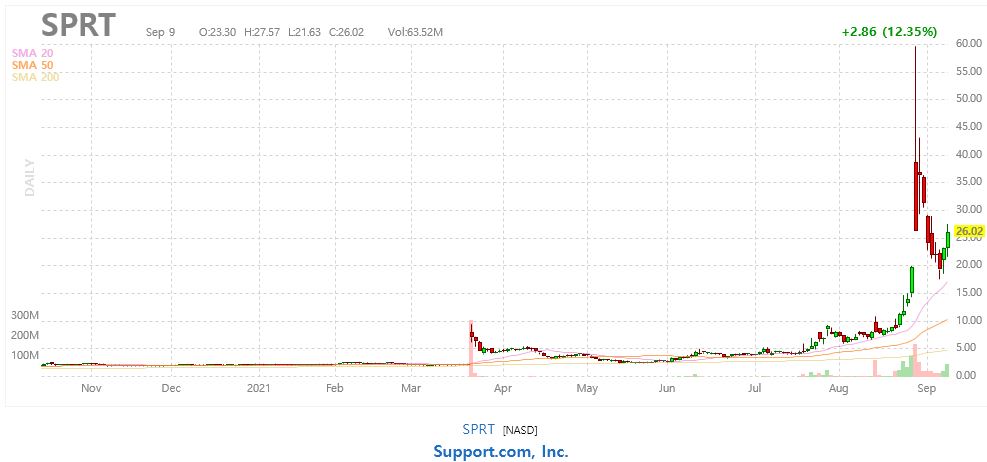
It always seem to start with one outlier move in a stock that gets retail traders excited, looking for the next play to repeat that kind of move.  This time, it was SPRT, a massively shorted stock with over 40% of the float shorted.  That parabolic move in late August also coincided with the AMC squeeze during that same week, ending on Fri, Aug 27. 


AMC is the most owned retail stock among the daytraders, and its moves often determine the mood of the small cap speculative marketplace.  AMC has been steadily going higher over the last 2 weeks, pumping up the bullish sentiment among retail.  

Then the second wave plays start to come along, trying to find the next SPRT, and they have piled into BBIG, another stock with a high short % of float.  

And BBIG is now the most popular name among the small cap pump and dump traders, and recently traded over 1M options in a single day, almost as much as AAPL, the most popular single stock option.  And of course, almost all the action in BBIG is in calls.  The call volume is so high that it now will likely follow the AMC weekly pattern of strength on Monday/Tuesday as retail traders pile into weekly calls, and weakness on Thursday/Friday as they either sell their calls, or let them expire worthless.  Retail traders don't have the capital to exercise their call options (if in the money) in almost all cases, so they either have to sell on their own or they get liquidated due to lack of margin.  

What is interesting is that the SPX is trading sideways to lower for the past few days and it hasn't made a dent into the bullish sentiment among the Reddit and Stocktwits crowd.  Usually these periods of hot speculation don't last for long.  The hotter the fire, the faster it burns out.  

These kind of frothy small cap markets and bitcoin speculation all have their roots in very loose monetary and fiscal policy.  Its not a sign of prosperity or technological progress.  At least in 1999-2000 you had a real gaming changing technology (internet) that was at the root of the speculation.  The root of this speculative fervor that has been on and off for the past 17 months is just because there is way too much money sloshing around.  With this kind of profligate fiscal and monetary stimulus, the US dollar has become part reserve currency/ part casino chip.   

This is the monster that Powell has helped create.  There is no going back to a regular ordinary market without a big drop in the SPX.  Will the Fed come in to rescue the post bubble crash with more QE and perhaps equity ETF purchases?  I believe the answer is yes, but will it be enough to get a V bottom off the biggest bubble ever?  That would require some serious firepower and not just jawboning.  Are they willing to throw the US dollar under the bus (and risk reserve currency status) to rescue the stock market?  They just may be dumb enough to do it.  

Seeing subtle signs of weakness in the SPX, I do think that will lead to a bigger dip next week, and it seems like traders have been front running post opex weakness by selling around monthly opex (in May, June, July, and August).  Treasuries look like it has strong support at 1.37/1.38% 10 yr yield, and it bounced again.  Fund managers seem to be slightly cautious, but their positioning doesn't seem to have changed.  And as mentioned earlier, retail traders haven't been this bullish since early June.  With Fed taper still in front of us, and debt ceiling/possible government shutdown over the budget, there are still some events for the market to worry about in the coming weeks. 

Tuesday, September 7, 2021

Too Many Traders

Human psychology never changes.  The greed-fear cycle always repeats.  Money can be on a gold standard, it can be pure fiat, the cycle will always be there.  It was there in the 1800s, the 1900s, and now this century.  

Those trying to make easy money, a quick buck, are like ocean waves.  Usually the waves are small, and only a few are interested in riding them.  But there are times when the waves get huge and many look to ride the next big wave like the one right before it, trying to strike it rich.  You saw it in bitcoin and the stock market in 2017 and the beginning of 2018, and you are seeing it again starting in 2020 and now a full blown mania in 2021. 

Looking at the trading volumes and the speculation, as well as the nonfarm payrolls numbers, it is apparent that many people have quit their jobs and are collecting unemployment bonuses while speculating in bitcoin, NFTs, meme stocks, sports cards, call options on big cap tech and memes, etc.   Just because the federal government unemployment bonuses expire this month doesn't mean a bunch of people start looking to work.  It's hard to go back to real work when you can "make" more money more comfortably just clicking your mouse being your own boss with no obligations.  

This is what happens when the government prints so much money and gives it away through fiscal handouts, both individual and corporate.  The motivation and need to do real work diminishes, and you get a labor shortage and wages go up.  Its just supply and demand.  When the supply of labor drops, and the government does everything in its power to push demand up, it becomes harder to find workers, and you will end up with a big wage increase for blue collar and service jobs.

When companies can't find workers, because they are collecting unemployment and daytrading cryptos and meme stocks, they have to raise wages to attract new workers and raise prices to stay in business.  The result is pure inflation, which will continue to be downplayed by Pumping Powell. 

All the newly minted traders over the past 18 months is a negative for productivity.  Traders provide no economic value added.  They provide no value added for society.  I would even argue that traders are a negative for society.  They consume but produce nothing.  They add demand but provide no supply.  If tomorrow, everyone decided to become a trader, inflation would go through the roof.  Farmers would do just fine without speculators.  Investment bankers and venture capitalists would do just fine without traders.  

I know there are many that try to justify their existence as traders as saying that they provide liquidity in the capital markets, improve price discovery, and all kinds of other nonsense.  I am a trader and don't try to justify my job as anything that is a net positive for society.  I'm just trying to make a living.  The caveman of ancient times was just trying to survive, take care of himself and his family, and if he was doing very well, his tribe.  He didn't care if him killing a buffalo would negatively effect somebody else who had one less buffalo to hunt.  I'm just a caveman living with modern technology.  The money that I make comes at the expense of other traders.  The money that I lose goes to other traders.  Its just a game for big boys.  Nothing more, nothing less. 

The root of the out of control greed in this market is the Fed, of course.  Who else.  You can't blame millenials on Robin Hood.  They are just flies attracted to shit.  Its instinctual. 

The elephant in the room is Powell who is running reckless monetary policy.  Almost nobody calls him out on it because of the Rona and its variants and because now so many are invested in the stock market.  Just look at how equities are as a percentage of household wealth.  As a result, almost everyone wants it to keep going up, even as its creating the biggest bubble ever and negative consequences.  

They like Powell, because he's very dovish, and the stock market is going up.  But in the aftermath of this bubble, Powell will probably be considered the worst Fed chairman of all time when investors see how much money they've lost buying in the midst of such a huge bubble when prices for speculative play things like bitcoin, NFTs, and meme stocks crash back down as greed turns to fear. 

Its been clear for decades now that the Fed doesn't really care about inflation, even though its in its mandate.  They care about 3 things: stocks, bonds, and employment, in that order. And they will keep running loose monetary policy because that's what the masses want. 

The most likely scenario is that once the taper starts, likely at the beginning of 2022, the market begins the volatile topping process.  By the time the taper is finished, in the fall of 2022, you can expect a waterfall decline soon afterwards as the market starts to worry about the the beginning of rate hikes, and the prospects of no more fiscal stimulus after the Republicans take one or both Houses of Congress in the midterm elections.  Into that kind of waterfall decline, Powell will be frozen in his tracks and immediately kill any rate hike talk and go back to hero dovish mode with hints of restarting QE.  Basically they are stuck at ZIRP forever.  

Unlike the V bottoms in Dec. 2018 and March 2020, after the next waterfall decline, everyone will be way too deep into equities at all time high valuations.  Its going to be a much more precarious situation than 2018, than 2020, with the very high household equity allocations and lack of hedging from bonds with its super low yields.  The only way the Fed could manufacture the kind of turnaround that you saw in March 2020 is if they do unlimited QE purchases of Treasuries, MBS, corporates, and equity ETFs at monster levels of $500B+/month, at a minimum.  I wouldn't rule it out, but it would probably take at least a 30% down market before they step in with that kind of bazooka.  

Let's not look too far ahead.  12 months feels like a lifetime in the stock market.  The bubble will get bigger.  Just because I see the writing on the wall, doesn't mean there won't be buying opportunities this year.  Things will change in 2022, but still plenty of time until that hammer drops.