Friday, May 29, 2020

Permanently High Plateau

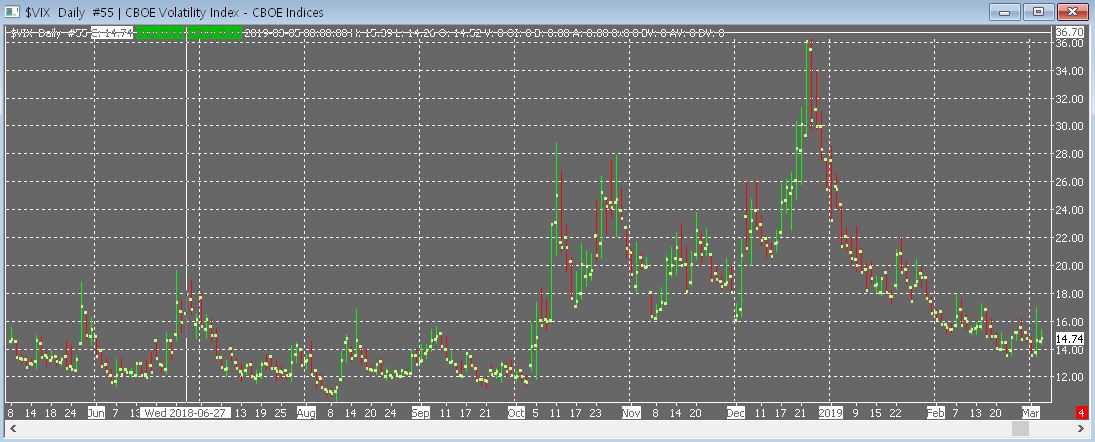
No, I am not talking about the Nasdaq.  I am talking about the new high plateau, the VIX.  This is not normal.  The VIX is usually mean reverting, and goes back to where it came from, or close to it, after it spikes during a big selloff.  The only time the VIX maintained a high plateau after a big selloff is 2008. 

A VIX that is high (28.59 at Thursday's close) and refuses to go lower as the market goes higher.  That didn't even happen in 2008.  We are clearly in a different market environment than any of the other post waterfall declines we've seen over the last 10 years. 

The VIX has refused to go under 26 even though the SPX has gone from 2192 to 3068 in less than 70 days.  This is happening despite the fact that unlike the past 2 bear markets, in 2000-2002 and 2008-2009, you have a bunch of systematic options sellers who sell options for income and to get yield, because global bond yields are so low.  

If things were back to normal, and we assume it is all uphill from here, like all the past waterfall declines in the last 10 years, then how do you explain the difference in VIX behavior? 

Following are the post VIX spike charts (70 days after the VIX spike) for the last 7 VIX spikes since 2008. 

 October 2008

May 2010

October 2011

August 2015

February 2018

December 2018


March 2020


If you look closely at the VIX charts, its clear this is nothing like the past selloffs.  The only chart that a has much higher VIX 70 days after the spike are now and late 2008. 

Just trading or watching the SPX on a daily basis and you can feel the intensity of the selloffs and the rallies.  And yet you have very little fear and a lot of speculation going on in the options market, as the call volume is through the roof, much of it coming from small speculators. 

It is one of the most irrational rallies that I have ever seen, no wonder a lot of the so-called smart money hedge fund managers who are right more often than wrong like Stan Druckenmiller or David Tepper are bearish on the market overvall, but oddly, they are still bullish on big tech. 

Its so hard to explain the rallies that a lot of people go with the lazy and simple excuse that its because of the Fed.  Sure, that can explain the beginning parts of the rally in March and April, when the Fed was buying enormous amounts of bonds, but its hard to say that the rally in May is because of the Fed.  The Fed has drastically reduced their bond purchases since March. 

This week, I think we've finally got a lot of investors saying "screw it, its going to keep going up, get me in.".  You can see it in the huge outperformance on Tuesday and Wednesday in the Russell 2000, and the underperformance in the Nasdaq 100. 

They usually chase the junkiest stocks late in the rally, as everything else has gone up huge, and only the junk is left which hasn't gone up much, and is therefore the most tempting to buy. 

There is a huge pot of gold at the end of the rainbow for the shorts, but to get there won't be easy because the post bubble psychology is still pervasive.  Buyers who have FOMO, and don't want to miss any more of the V rally, and don't want to regret missing out like all the other times the last 10 years.  It has taken over 10 years for that bubble FOMO mentality to finally develop, and apparently it has not gone away after one big crash and biggest economic crisis since the Great Depression. 

These are kamikaze investors with short memories, they have forgotten about 2000.  They have bought into the new age thinking that MSFT, AMZN, GOOG, FB, and AAPL are invincible and will only get stronger because of the coronavirus, as it eliminates the competition.  Although this logic is not as bad as the valuations based on eyeballs back in 2000, its quite a stretch, to try to say that these giant companies are immune to the effects of a huge economic contraction.  The dotcom bubble was bigger and broader and crazier than this big 5 tech one, but the over the top and cringe worthy rationalizations for the unreal overvaluations are similar. 

The strong rally off the March low has only emboldened these new era investors who come up with new metrics like high stock dividend yields vs bond yields to rationalize the high P/E and P/Book ratios. The warning signs are too numerous to think of right now, I am just rattling off a couple of them. 

Anyway, this is a golden opportunity for short sellers, or those who have survived and are willing and still have enough conviction to put on size into this seemingly never ending bear market rally.  I have added to shorts this week.  Getting ready for bear.  And I could care less about whatever Trump does or says on China, as that is completely irrelevant and meaningless for my thesis on why this sucker will eventually go lower. 

Tuesday, May 26, 2020

Post Bubble Reduced Cash Flow Environment

The psychological 3000 barrier has been broken, of course, in overnight trading.  They don't dare try to break that barrier during regular hours, due to the sheer amount of resistance that would have been there if the trading desks were all watching.  Like it usually happens, the big moves happen overnight, and its another short squeeze moment. 

Remember, this is both a post bubble and post crash environment.  There are 2 psychologies at play.  The post bubble psychology is the one that's leading the charge higher since March 23.  In early February, TSLA was going bananas, speculation was commonplace, and there was still the afterglow from the US China phase 1 trade deal.  A lot of investors were complacent and bullish.  It took many months for that to build up, and arguably took 10 years to get to the stage where an economic shock could take the SPX down 1100 points.  1100 points = 32% of the all time high. 

A post bubble environment is not one that is conducive to a continuation of a rally.  The rebound is quick, there is FOMO, and investors go back to thinking that the March crash was just another correction in an ongoing bull market.  It makes the market vulnerable to another waterfall decline.  

The post crash psychology is supposed to delay the rally, making up moves hesitant and accompanied with high volatility.  While the rally has not been delayed, volatility has definitely stayed high. 

Based on the past 2 months price movement, the post bubble psychology is the dominant one over the post crash psychology, and it makes this market dangerous for bulls now that complacency is being rebuilt, mainly based on price action, but also helped by "good" coronavirus news.  We got another one today with the NVAX vaccine trial news, which is meaningless, but used to try to explain a monster gap up when there is no other reason for it.  

Unlike the 2011, 2015/2016, or 2018 SPX waterfall declines, this one is happening in an environment where earnings will decline significantly and cash flows will be dramatically reduced.  As a result, stock buybacks will be reduced by at least 50% compared to years past.  These are huge fundamental changes to the supply/demand equation for equities, making it unlike any of the previous big corrections post 2008. 

Of course, the last time earnings took such a big hit and caused stock buybacks to go down so heavily was in 2008.


 It is no coincidence that stocks tend to go down in the US when buybacks go down. 

I know a lot of people think none of these things really matter when the Fed is buying up all kinds of bonds, including junk.  Thus flowing through to the stock market.  But money that goes to the bond market is usually going to stay in the bond market.  Money that goes into money market funds will usually stay there, or go to less risky assets like bonds, not stocks. 

The cash on the sidelines argument is baseless, and doesn't take into account the way capital is allocated.  Money is separated and sent into certain buckets, a non-risk bucket, a low-risk bucket, and a medium-high risk bucket.  Right now, almost all the money that the Fed is printing is going towards the non-risk and low-risk bucket.  Very little will flow into stocks, definitely not enough to outweigh the reduced buyback flow to come this year and in 2021. 

The best way to describe the current investor psychology is that the bulls are a mile wide and an inch deep.  The buyers in this market are looking for a quick buck, weak hands, not true believers who think stocks are a table pounding buy.  When stocks are held with low conviction, then its easy to shake them out. 

While the reopening and coronavirus vaccine news give the buyers courage here, it just sets up the market for disappointment when the economy is still not that strong after the reopening and people decide to save more instead of spend more. 

There are big hurdles coming up in the fall, a potential second wave of infections as kids return to school and workers return to the office, people go to bars/restaurants/etc.  And of course the election in November, where polls show Biden clearly ahead of Trump, and already Biden is talking of increasing corporate taxes and going after serial tax evaders like AMZN, GOOG, etc to collect tax revenue.

There is horizontal resistance from the summer 2019 highs of 3025, and this could be the fake breakout above 3000 that traps the bulls.  I remain bearish and will add to shorts this week. 

Wednesday, May 20, 2020

Risk Parity Needs NIRP

Risk parity was the dominant paradigm ruling asset markets during the ZIRP and QE era of the 2010s.  Can it rule again now that we're back at ZIRP with QE?  It depends on if the stock and bond markets want to push the Fed into a corner.  The neg corner.  Yes, the much dreaded negative Fed funds rate. 

Risk parity is backed up into a corner, because of the zero lower bound, and the Fed's insistence that it won't bust through it like Europe.  Without negative interest rates, there is very little upside now for bonds, and hence, they won't provide much of a hedge when stocks starting going down big.  That's a problem because the basis for the average portfolio is the 60-40 stock/bond model, which is still the most popular strategy among long term investors. 

What happens when bonds don't go up much when stocks are going down a lot?  You get more panicky moves in stocks, because stock investors don't have much of a hedge with bonds anymore, so they will need to sell stocks to reduce their risk, instead of just relying on bonds to reduce their risk for them.  

Unlike ZIRP and QE from 2008 to 2015, the ZIRP and QE now is a totally different monster.  Just look at the yield curve change from 10 years ago.


In 2010, you had 5 year yields north of 2%, now they are trading at 0.35%.  10 year yields were trading above 3% back then, now they are trading 0.70%. 

Bond investors are now fighting for scraps, a few more bps lower yield, because Powell has said he won't entertain negative interest rates.  The stock market doesn't care right now, but what happens when risk parity doesn't perform because bonds can't go up when Fed refuses to lower rates anymore?  A tantrum, that's what happens.  The market will have a tantrum until it gets what it wants. 

If you think the market pricing in negative interest rates was just a technical fluke or the market's way of testing the Fed, you are underestimating the power of the market.  The market controls the Fed.  The Fed follows the market because it is beholden to stocks and tries to please the stock market at all times.  Forget Volcker and the old way of doing business.  The stock market is the king.  The Fed and Congress are its slaves.  

What difference a day makes.  Yesterday's nasty close on the MRNA vaccine reality check lasted just a couple of hours.  It is all uphill since then, and shorts are being squeezed again.  Holding off on averaging up until tomorrow, we are close to a blowoff top as retail pile into junk small caps, beaten up airlines and cruise companies.  The end of the risk rallies are usually signified by speculation in risky names, and that's what's happening.  Risk reward is very favorable for shorts here. 

Monday, May 18, 2020

Nasdaq 100 Underperforming Now

The short squeeze is back on.  What a market.  The volatility remains intense, both going up and down.  But the bounce up off the Thursday intraday bottom has been led by small caps, not the Nasdaq 100.  The Russell 2000 futures is up 5.6% as I write, while the Nasdaq 100 futures are up 1.9%.  That is a huge change of character for this market which has been led by Nasdaq 100 stocks. 

The buying in the momentum big cap stocks looks exhausted, and the money is flowing to the laggard small caps.  The US stock market will only go as high as MSFT, AAPL, GOOG, FB, and AMZN will take it.  The market cap of those 5 stocks combined is over $5 trillion.  They are THE stock market.  And they have been underperforming the past 3 days.  It is still a bit too early to say that they will start lagging now, but the most popular hedge fund trade is still long Nasdaq 100, short Russell 2000.  If that trade starts to go bad, I have a hard time imagining the broader market to sustain a rally. 

Let's see how the hedgies react to their long/short positions going against them in the coming days, if they can't get their favorites to outperform anymore, that's probably the sign that the buying in those names is completely saturated, and the Nasdaq 100 is topping out. 

I have added some shorts this morning on the big gap up, will add some more if we rally more in the middle of the week. 

Friday, May 15, 2020

Japanification of the US Bond Market

The Fed has insisted that negative interest rates are not on the table.  Yet.  While I don't believe the Fed will go to negative interest rates until the market has a tantrum over it, the door is definitely open.  That's because the financial markets could demand negative interest rates if the bear market is deep and long enough, and stock and bond investors get desperate enough.

Which means there is a high probability of it happening.  Even if the banks don't want it, the pressure from the rest of the economy would be too great for the Fed to resist investor demand for even lower rates, even if they are negative.  I am sure the Fed would find more ways to subsidize the banks if the rates go negative to placate the banks under such a scenario.  Much like they have done with interest on excess reserves after ZIRP in 2008, which is a backdoor subsidy to the banks. 

The ECB didn't decide to go to negative interest rates to hurt the banks, or to provide interest relief for sovereigns, it was to drive the value of the euro lower and  to lower corporate and mortgage yields to stimulate their moribund economy.  And it didn't work.  Because the demand for credit is more inelastic to interest rates or even exchange rates than the central banks believe.  Not many corporations or individuals decide to suddenly borrow more money because the interest rate has dropped 0.5 or even 1%.

Even though it hasn't worked, the ECB still has maintained negative interest rates.  That's because once you lower interest rates to zero and beyond, the financial markets get used to it and price assets based off of that assumption.  And anytime you raise interest rates, it hurts financial assets.  And its pain that the central bank doesn't want to take or be blamed for.  So the easy way out is to just keep the same rates, or even lower them a bit more, even though the European banks are screaming not to.

The ZIRP and NIRP trap is almost inescapable.  The US was able to escape the ZIRP trap from 2017 to 2019, but that lasted 3 years, and now we're back at zero, and trapped much tighter to the zero bound than the last time.  There is a lot more debt, both public and private relative to GDP than 2008.  The US is now trapped to the zero bound as the easy money policies have encouraged an explosion of debt, which makes the economy vulnerable and weak when interest rates go higher,making it impossible to raise rates.

What about inflation, you say?  Lies, damn lies, and government statistics.  The CPI and PCE are fraudulent indicators of inflation.  They vastly underestimate price increases through hedonic pricing adjustments and substitution assumptions as well as technological "value" added.  A car that increases in price 10% with subjectively (the government decides) 10% better technology and features is considered a 0% increase in price, not 10%.

So the government will lie about inflation and if it gets high enough that the lie is obvious and investors revolt from buying US bonds, the Fed will just come in with a bigger QE, but more likely, tighten their yield curve control.  Yes, the final resort of central banks that have no natural organic demand for their bonds.  Manipulating the long end of the yield curve, just like they manipulate the short end.  Japan's yield curve control has kept the 10 year yield around zero.  And the volumes traded in the JGBs are tiny compared to when they were natural free flowing markets. That is a preview of things to come for the US Treasury market.

This comes back to what the implications are for the bond market.  It means that the whole yield curve will eventually be managed by yield curve control in the US, to suppress interest rates in longer maturities.  The volume of Treasuries being issued is enormous due to all the fiscal pork stimulus that's been passed.  The amount of QE that the Fed would have to do would make the balance sheet skyrocket beyond anything we've seen among the global central banks.  That would start to undermine the credibility of the US dollar as a reserve currency, so you can bet the Fed will try to find an easy way out of this mess by stating their willingness to buy unlimited Treasuries above a certain yield for each part of the curve, let's say 0.5% for 10 year notes, or 1% for 30 year bonds.  And those rates will be adjusted lower if the stock market goes down.

And remember, the BOJ is a trailblazer when it comes to experimental monetary policies.  They are still buying a ton of Japanese equity ETFs, and are the elephant in that market now.  The Fed will not go there until they get through doing more extensive buying of corporate bond ETFs, including junk, and then they'll move to yield curve control, and then finally the big bazooka, equity ETF purchases.

That would give enormous power not just to the Fed, but to those constructing the constituent companies in the ETFs that the Fed will buy.

The free market as we know it will be completely obliterated.  It doesn't make stocks a long term buy.  Not unless you hedge out the currency to gold or some other hard asset.  

Corporate socialism and cronyism are about to get upped several notches higher.  And there is no going back, unless you get a revolution.  And that's not happening when the masses are this dumb.  The lack of education among the masses in the US is the primary driver behind a continuation of these policies.  The only thing that will get through to the thick skulls of the masses is rampant inflation and a big drop in the standard of living, which probably will happen if globalization ends.

I am no fan of globalization, but it has kept inflation in a lot of manufactured goods relatively low for the past 20 years.  Whether you like China or not, they have been subsidizing US consumer spending for decades now by using their low cost labor force to pump out cheap goods everywhere.  The political pressure will now be to decrease trade reliance on China, and bring more manufacturing to the US. 

When globalization and free trade decreases, while fiscal deficits skyrocket and Fed money printing covers the deficits, inflation will increase, without a doubt.  Right now, probably for the next 12-18 months, inflation will be under control due to the huge economic hit from the coronavirus.  But unlike 2008, this crisis is leading to a gigantic explosion in the US budget deficit.  If you thought the 2008-2009 trillion dollar deficits were bad, the 5-10 trillion dollar deficits in the coming years will make it look like child's play.  When the dust settles and the crisis is over, you will be left with a mess of a financial situation: low rates, huge deficits, and high inflation. 

Once you get these huge budget deficits, much like zero interest rates, they remain sticky.  Its hard to cut government spending and raise taxes.  Especially when the Fed is willingly buying up all that newly issued debt and the dollar maintains its reserve currency status.  Until the rest of the world starts to rejects the US fiscal and monetary policy by moving to alternative currencies as a means of exchange for global trade, expect the pork to keep flowing and the Fed to keep buying.

MMT will be the beginning of the end for the US dollar as a reserve currency, and it is happening now.  With Trump's poor handling of the coronavirus and his weak poll numbers vs Biden, its likely that the Democrats will win the White House and probably both Houses of Congress.  That will be the open invitation for the US government to enact full blown MMT policies, massive government spending, minimal tax hikes to pay for it, and the subsequent Fed asset purchases to keep interest rates low and stock markets high.

Its coming, the US government will not let a crisis go to waste.  They are now hell bent on taking control of the US economy, soon to make China look like a complete free market system in comparison. 

We got a strong intraday bounce yesterday.  But is right back towards levels where I want to short, so I have entered a small short here in the premarket hours.  I will add more if we rally during regular market hours, with plans to cover below 2800.  

Thursday, May 14, 2020

SPX 2820-2940 Support Becomes Resistance

During the middle of the trade war rhetoric in August 2019, the SPX had a little pullback down to the 2820 level, and subsequently traded between 2820 to 2940 for about 3 weeks.  It was the support zone which eventually launched a big rally later in the year.  Now that support area has become a stiff resistance level.  It has violently turned down the SPX momentum as soon as it got towards that 2940 level.


Its funny how these big air pockets coincide with after the fact comments from hedge fund favorites like Druckenmiller and Tepper.  These guys are always talking their book, and often use their fame and reputation to manipulate markets in the short term to get favorable entry or exit points for large scale positions. It was no coincidence that Paul Tudor Jones was hyping up bitcoin as the fastest horse in the stable after it had already rallied big and before a much publicized halving which ended up being a huge buy the rumor sell the fact event.  You can bet that PTJ was dumping bitcoin right after he was hyping it.  A page out of Livermore's book, something he himself says is the best trading book ever published.

It doesn't make me any more bearish because these famous hedge fund managers are bearish, it is noise to me, because while some of them are right more often than not, some of them are reliable contrary indicators.

There are many reasons to be bearish: earnings fundamentals, overvaluation, reduced corporate cash flows, etc. and maybe the only two reasons to be bullish is the Fed put and light hedge fund equity positioning.   But the Fed put is at a much lower strike price than current levels so it wouldn't protect buyers at this level of the S&P. And really the only reason I haven't been more aggressive on the short side is because of hedge funds being under allocated to stocks.  But some of that has been changing over the past couple of weeks, especially equity long/short hedge funds, which have gotten much longer recently.  Really its just the macro funds and the CTAs which have very low levels of equity exposure.  If they do ever join the bull camp in the coming months, then it would be a screaming short.

After 2 nasty selloff days, with tomorrow being options expiration, the SPX 2800 level will probably be defended vigorously by market makers and banks, so I wouldn't be surprised if we bounced today into tomorrow morning's SPX options expiration.  I will consider a short if we can get to the 2860-2870 level tomorrow, otherwise I will wait to see what happens next week.

Monday, May 11, 2020

Allergic to Staying HIgh

This is nothing like the V bottom off the December 24, 2018 low and the subsequent 4 month V shaped rally.  Back then, stocks would make new highs, but not give up much ground, have only tiny pullbacks, before going to even higher levels.  This market is making new local highs, but not staying at those high levels.  Instead, you get immediate substantial selloffs, either intraday or through gap downs like today and May 1st. 

As I have said before, the VIX is still very high considering how much stocks have rallied, which is a negative, because that isn't what happened during the past V bottoms and higher volatility with higher prices is usually a sign that markets are vulnerable to a sharp move lower (see December 2014, January 2018).


Top chart is from the VIX spike in December 2018, and the bottom chart is the one from March. 


Yeah, there was some bad coronavirus news over the weekend, but nothing that would really change the current global economic trajectory.  The market doesn't care so much about the coronavirus data as much as the government reaction to the data.  And right now, most governments are kind of sick of locking down and seem eager to move on to at least a partial reopening, even if there are still thousands of news cases daily. 

The bear case doesn't rely on governments going back to another lockdown, you just need to see new cases stay high enough to keep a substantial portion of the population from consuming normally and saving more to keep the economy weak.  It seems the US government isn't looking to hurry to a phase 4 package, so its going to take some stock market weakness to get more fiscal stimulus into the economy. And the only thing keeping the global stock markets up at these levels is government stimulus. 

I know there are some who think all this money printing and fiscal stimulus will keep the stock market going higher even with a weak economy.  But if the economy is weak and companies have much reduced cash flows, then the stock buybacks can't continue at the same pace as in the past, damaging one of the biggest sources of stock demand over the past 10 years.  Eventually, lower earnings and higher P/Es are going to make investors reluctant to pile there money into stocks when they notice that stocks are much more volatile without that big buyback bid backstopping them. 

I think most of that stimulus money will just end up being saved in money markets or safe fixed income assets.  Yes, that will provide a big potential source of equity buying power if earnings start to recover, but that's a long ways away. 

Let's not forget that we had a massive bubble in February, with investors near record levels of bullishness.  Investors are not bearish enough considering the economic realities.  The baseline level of investor attitude towards the stock market should be bearish, not the current attitude of economy sucks, but the stock market is different than the economy and the Fed has our back.  There is too much faith in the Fed and government put right now and people are not realizing that those puts have strike prices much lower than current levels. 

It is opex week, so usually you don't get big moves down.  However, with traders leaning a bit too bullish right now, I don't expect any big up moves either.  Probably a choppy week setting up a bigger pullback starting next week.  Waiting for the right setup to initial short positions.  We're almost there. 

Wednesday, May 6, 2020

Bonds Weakening Stocks Topping

The peak of the mountain is in view.  When the bonds finally start weakening, you know you are in the last innings of the rally. 

The bear market rally is in its final leg.  The next rally towards SPX 2950 will be the one to hammer down.  Bears always want to see bonds weakening before stocks top out.  It was the signal for the topping phase in spring of 2000, summer of 2007, summer of 2015, and fall of 2018.  This time, you are not getting much of a selloff, with the Fed massively distorting markets, but even this obnoxiously dovish Fed will take its foot off the pedal a bit after seeing a 30% stock rally. 

Last week's FOMC meeting was notable in that the now uber dovish Powell didn't promise an unlimited QE program like Bernanke would have done, instead, he left that little bit of extra ammo for when the market weakens.  And there is no doubt that an unlimited QE program that monetizes all the debt that the Treasury issues will be coming down the pike at the first signs that the SPX is back in a downtrend. 

That doesn't make me bullish on stocks, because the Fed put is way out of the money at this point, and its been well telegraphed, so a lot of the Fed dovishness and action is priced into the hard to believe overvaluation in the face of an economic depression. 

The lack of Fed action and growing economic optimism is showing in the bond market, as the long bond has sold off for 6 straight trading sessions.  I know that the Treasury auction announcement made people suddenly worry about all the extra coupon supply, but it wasn't that MUCH supply.  What it is a growing fear that the Fed will not be buying up enough Treasuries in the coming months to keep yields as low as they have been for the past month.  The Fed doesn't meet until the middle of June, that is a lot of time for the bears to jump on the opportunity to do some damage while the Fed is relaxing and content with what they have already done. 

The time to put on long term shorts is very close.  I can feel the bulls overplaying their hand and as I've mentioned before, the shorts who fought this rally in April have mostly thrown in the towel.  A very weak economic backdrop, where earnings will be impaired for several quarters, is significantly reducing the amount of stock buybacks, the fuel which has driven this 11 year bull market. 

Now the bears have almost all the advantages here.  Yet I am waiting, for that exquisite shorting moment, when the bears are all on the run and scared, like last Wednesday.  There should be one more moment like that coming within the next 2 weeks.  I will grab the short at that time and keep it for a long swing. 

Friday, May 1, 2020

Shorts Threw In the Towel

The short sellers who have been fighting this rally for the past 5 weeks have finally thrown in the towel.  They were short stocks and most of the remaining bears threw in the towel this week. 

According to both GS and MS Prime Brokerages, long short hedge funds did a massive amount of short covering on Wednesday, the FOMC day, where everyone was expecting a dovish Fed and more rallying. 


I definitely regret a great opportunity to smash this SPX pig with a short and butchered the exit, covering a day early.  There will be probably at least one more push higher, so best to be ready to fire off the shorts between SPX 2950-2960.  I really doubt that it will stay above 2900 for long, so best to get off the shorts quickly when you have the opportunity, with the understanding that it can go a little bit past your entry, because this market is trading unhinged, with volatility that is still intense even after 5 weeks of rallying. 

There is an underlying tension between the fundamentals, and the light hedge fund positioning and upward momentum.  You can sense how quickly the rallies give way to rapid selloffs, with prices not staying elevated for long.  This is a definite change in character from previous V bottoms, when rallies would not be followed by selloffs, but by very shallow retracements, or just flat lining before taking the next step higher.  Stair step moves higher, with very little give back.  This market is the opposite.  The trend is higher, but big chunks are given back after each rally. 

This market just feels different, as if the up moves are fake and temporary and mostly  short covering, and without the big time stock buybacks (most investment banks expect about a 50% drop in buyback dollar volume this year)  to support the market on down days, you get these air pockets lower, like you saw the last 2 days. 

The price action is about as bearish as you can get for such a big rally.  Its always a better sign when volatility is going much lower during a rally, instead of maintaining this up and down turbulence.  We are 6 weeks into the rally and the VIX is still at 39.  That is ridiculous levels of volatility for such a long rally. 

I am itching to short the next rally, as it probably will the last great short entry point before you get more prolonged selloffs and lower SPX levels.  There is significant resistance at 2950, which is the October 2018 high, which preceded a 20% selloff, and the May 2019 high, which preceded an 8% selloff, the biggest of 2019. 

Forget those looking for a December 2018 style V bottom, its just not going to happen.  This is a different beast and it looks like this week was the first big flashing amber light that warned that the end of the bear market rally is almost here. 

Wednesday, April 29, 2020

Another Remdesevir Pump

They are milking this "miracle" drug for all its worth.  Its a crap drug, but they are getting a bunch of broad index pumping out of it.  This is another pre market pump on supposedly good news for this miracle.  Now everyone is free to go about their normal lives and not have to worry, with remdesevir, there is a backstop.  LOL. 

Of course, remdesevir is only part of it.  It is the eternal hope, the Fed, which is the reason that we were levitating higher in overnight markets because, Powell will be dovish and who knows, maybe he will hint at buying stocks in the future, or at least won't rule it out. 

Pension funds are rebalancing out of stocks and into bonds this week, and today and tomorrow should be the main rebalancing days.  It doesn't seem to phase stocks, as they keep going higher, as a combination of a big short squeeze ahead of the Fed and hopes for great things after the reopening of the economy rally stocks again. 

I have entered a short today, a little bit early as this thing goes higher even with the big gap up.  At these levels, the risk reward favors shorting.  I will probably close it out later this week, so not a long term short. 

Thursday, April 23, 2020

Negative Oil Price Bottom

When you see oil futures going from $6 to $16 after the oil "experts" on CNBC and Bloomberg say oil prices are probably going to go back negative, I tend to listen to the market and not the analysts. 

You had a classic panic bottom in oil, as the biggest oil ETF, USO, panic dumped a huge chunk of open interest in the NYMEX June Crude Oil futures and rolled it into July and August, effectively selling at the bottom and buying back less (July and August futures are more expensive, so they had to buy less when they rolled over the contracts). 

What happened on Monday was panicked speculators in the May futures who didn't have enough liquidity to sell their holdings as there weren't enough end users who were willing to buy from them, so it was a game of hot potato until prices got so negative that producers who actually were short finally decided to close out their positions.  May futures actually ended up settling at 10.01 when it expired on Tuesday, so that is the price that producers were willing to pay to take delivery, a better indication of WTI oil prices than the negative numbers on Monday.  But the financial media loves to sensationalize everything, so they ran with the negative oil prices story, and figured that since there is very little available storage in Cushing, the same thing would happen in the June contract. 

But there are still several weeks till June, and producers are not going to keep pumping oil and sending it to Cushing when they have to pay to do it.  Its just more cost effective to just shut in the wells.  And that's what is going on right now.  And with the negative price fiasco on Monday, the producers will be even more urgent about cutting production to avoid losses. 

The price action from Tuesday to now, with June CL futures going from $6 to $16 is telling the truth, while the oil "experts" talk about negative prices and tank tops like it's the latest hot fashion. 

I am no oil bull, I'm long term bearish on oil, but in the short term, prices went down not because of fundamentals, but because of irrational fear of negative prices.  The fear of future negative prices makes it much less likely to happen, as now the producers will be cutting more production than they otherwise would have.  This week went a long way towards speeding up the equilibrium between supply and post coronavirus demand. 

But unlike some of the irrational USO buyers on Robinhood or newbies who think that oil is now the bargain of the century, what will likely happen is that WTI oil will have to stay under $20 to keep producers from pumping out too much, and its very unlikely to see negative prices as oil in Cushing will just be diverted to other storage facilities, or on tankers, if the price gets too low.  So that will probably keep WTI oil between $10 and $20 for the next few months.

However, if after the lockdown is lifted and coronavirus cases start going up again, then all bets are off, not only for oil prices, but for the SPX and global equity markets.  The threat of a second lockdown will induce serious panic among not only oil traders but equity traders, and that could actually push WTI oil to near zero and SPX to retest the lows in March at 2174.  

But that's looking a bit too far out, in the near term, the anticipation of lockdowns being removed and people going back to work will keep a bid under both oil and stocks.  Also, OPEC+ plans on having another meeting on May 10 to talk about further production cuts so that's also another positive catalyst for oil.   Definitely not recommending going long oil, but don't recommend a short here either.  Same goes for the SPX, wait for the right levels, we are in the middle of the new range (2730-2870), so not a good risk/reward for either side short term.  Neutral here.

Monday, April 20, 2020

Fed Will Not Save You

Those betting on the Fed saving them if the economy stays bad don't understand who the Fed works for.  Their main constituent is not retail traders, or even long term stock investors.  They are working for the money center banks, big hedge funds that dabble in Treasuries, MBS, credit markets, and now private equity firms that need their junk bonds bailed out.  Powell is a private equity guy, he will never let them down.  He will do whatever it takes to guarantee that private equity firm owners (not necessarily clients) get big bailouts after the dust clears.  Mnuchin is the guy who hand picked Powell for Trump, so they are in this together.  Mnuchin is a vulture, he will do whatever it takes to enrich himself, and that usually doesn't mean letting current shareholders tag along for the ride. 

For a lot of the big banks, having companies restructure their outstanding loans and  debt so that banks get a big cut of the equity at the expense of current shareholders is very much in play for a lot of sectors such as energy, travel/leisure, restaurant chains, retail, commercial RE, etc.  The Fed will not come to the rescue of those shareholders when the money center banks stand to benefit from the fallout of these fragile broken companies. 

This stock market is whistling past the graveyard as the investing crowd has been conditioned over the past 11 years that any dips are buying opportunities and eventually it goes up, to new all time highs.  But the toxic combination of high valuations and horrible fundamentals in the stock market is not something even the Fed with unlimited QE can save. 

We are back to the US/China trade war angst levels of August 2019, or even worse, the FOMO "hot" economy top on January 26, 2018.  This market is expensive, and a lot of firms are facing solvency risk on a scale that hasn't been experienced since the Great Depression. 

There will always be doubters who get scared of shorting after big rallies, expecting an even bigger rally.  All I can go by is years of experience trading SPX based on news flow and gut feel.  Last Friday's opex euphoria in the overnight session on a "miracle cure" for the coronavirus did it for me.  The scale has been flipped from fear and loathing to irrational exurberance.  SPX 2880 was close enough to 2900 for me to enter the short side, especially with the opex peak usually followed by the post opex hangover as put protectionless equity holders suddenly realize that their portfolios are no longer hedged to potential huge downside risks in this bailout dependent crap economy and In Fed We Trust rally. 

Wall Street and newbie traders are putting lipstick on a ugly fat pig, rationalizing the rally with Fed unlimited QE, Congressional bailouts, and a V shaped recovery in the 2nd half.  Rushing the reopening of the economy is the worst thing Trump could do, because that will just keep the coronavirus lurking around, ever present, without ever really getting of the threat.  Doing a half baked lax lockdown is the worst of both worlds.  Killing the economy and not eliminating the virus. 

Trump's short term thinking will probably mean the economy reopens in May, which the equity market, with its own short term thinking, believing that will help the economy in the long run.  But apparently no one learns from history.  Here is the infection graph for H1N1 in 2009: 


 With the coronavirus more widespread now, the second wave of infections will probably be even greater than the first wave if the economy reopens and people go back to work.  This risk is definitely not priced in at current levels, and it will be absolutely devastating for investors to see countries go back into lockdown, and under such a scenario, a big revaluation lower in stocks would occur.

The last 2 big rally days have been followed by big gap downs in the SPX.  You think the suckers are gonna push their luck again and try to squeeze the market higher to see if there are greater fools up there willing to buy?  I wouldn't put it past US stock investors, they seem to be the most resilient group I've ever seen.  But with the biggest buyer of US equities over the last 10 years (corporations) suddenly looking more cautious when it comes to stock buybacks, the supply/demand picture for stocks is suddenly looking a lot worse than at any other time over the past 10 years.

Of course, Wall Street will never tell you that, and say that expect a V shaped recovery based on pent up demand and Fed/Congress bailout money, never mind that millions of small businesses will be closed with masses of unemployed workers, and the global economy will be just as bad, putting a big dent into international earnings for the multinationals. 

Fundamentals are so bad, and downside so big, risk/reward is very lopsided in favor of shorts here.  We probably chop between last week's lows and last week's highs (~2730-2870) for the next couple of weeks, get bulls complacent, and then roll over to lower levels. 

Friday, April 17, 2020

Remdesivir Euphoria

I thought I had seen it all, but this excitement over a coronavirus drug ramping the SPX futures overnight into hyperspace was totally out of the blue.  If the market wants to get euphoric so quickly, then so be it.  I will gladly oblige to provide liquidity by taking the other side of the trade.  I shorted SPX overnight and looking to cover around the 2800-2810 level.   

A lot of the move has been exacerbated by delta hedge buying leading up to SPX options expiration which is at the cash market open today.  Just a short term trade here, looking for a gap fill. 

It has surprised me at how quickly the market has gone from fear to euphoria.  Actually, from euphoria to fear in February/March was also shocking, just because of the magnitude and quickness of the selloff.  This is just a manic market, that trades with absurd momentum on both sides. 


I am now off the sidelines looking to get back to work on SPX, this pig is just too fat to resist.

Wednesday, April 15, 2020

Volatility After a Big Rally

This volatility after such a big rally intrigues me.  It is not common.  A VIX at 41 after a 30% rally is unusual to say the least.  This time is different.  This is no V bottom.  It is a massive short squeeze + FOMO rally with questionable fundamentals.  After a 30% rally, how often do you see 3% daily ranges? 

I am more bearish now than I was last Friday at the same price levels.  Volatile down day on Monday, followed by huge up day Tuesday.  And now a big gap down today on no news.  The volatile chop is one of the signs of a trend change after a big move. The sector performance also shows a narrowing of the rally, with mostly tech stocks and defensives leading the charge, while the financials lag and the energy stocks stay weak. 

It is a fund flow FOMO driven rally, a lot of the short covering has already happened, its desperate fund managers putting money to work, fearing that they will lag the indices even more if they wait it out. 

From a fundamental perspective, the aftermath of the pandemic will be grimmer than most think.  A lot of small businesses will cease to exist.  Bars/clubs/live events/conventions/airlines/cruises/hotels/casinos/restaurants will continue to suffer until there is either herd immunity or a widespread vaccine available, which is at least 12 months away.  That has a chain effect on other industries.  Also, the psychological effect after such an economic shock will result in consumers having an increasing propensity to save which reduces the velocity of money and lowers GDP growth. 

Reduced cash flows will present solvency risks for many companies which will either lead to outright Chapter 11 bankruptcy or massive dilution of current shareholders through either secondary offerings or conversions.  The duration of the recession will determine whether many of these public companies can make it without dilution or big debt burdens. 

At current valuations, none of these risks are priced in.  A near V bottom scenario is what is being priced in here, with many using the Fed and government intervention as a green light to speculate in stocks.  No, it is a green light to speculate in bonds.  The Fed's put option is much higher for bonds than it is for stocks.  In order for the Fed to directly come to the rescue, we will probably have to break the March lows to get their attention.  Since I expect that to happen later this year, the Fed will be coming in to rescue stocks, and I am sure Powell will go overboard like he's been doing. 

I am getting a sense that more and more investors are looking for this rally to continue for several more weeks, with the lazy view that the Fed and government will have their back.  That is a terrible investment thesis and shows a complete lack of understanding of what drives equity prices in the medium to long term (fund flows, valuations, future cash flows).  Companies are going to drastically cut back on stock buybacks, the biggest source of US stock buying over the past 10 years, and will have reduced cash flows, requiring either debt or equity issuance.  Those are negatives that many are ignoring for fear of missing the V bottom, and another 2019 like rally off the lows. 

The coronavirus is a game changer that is not only relevant for 2020, but will have lasting effects into 2021.  There will be more fiscal pork stimulus, but its only partially filling the economic hole.  Both production and consumption will be drastically reduced, something money printing will not solve. 

Monday, April 13, 2020

Positioning Vs. Fundamentals

After the furious rally last week that took SPX from 2488 to 2790 in 4 trading days (that's 12% in 4 days), a lot of investors are in shock and awe.  Usually you get these kind of explosive short term moves off of panic bottoms, but there was no real panic when the SPX went down to 2440 two weeks ago.

The one thing that last week showed was that there is a lot of risk capital available to be deployed, thanks to the the trillions that the Fed has already printed up and injected into the bond market.

Jerome Powell has decided to outdo Bazooka Ben Bernanke.   He is pumping out the various Fed giveaway programs with reckless abandon after receiving praise from his Wall St. friends and an endless pool of stimulus loving bulls.  The Fed syncophants believe the best way to solve a health crisis is to just print up a bunch of money and give it away to the Treasury and corporations.

Even during a pandemic, the US response has been trickle down, let the Fed and Congress give money to corporations and boost the stock and bond markets, hoping that eventually the money flows down to those waiting on the $1200 stimulus checks and who are standing in line at the food bank to pick up stale bread and years old canned food.

There has been a clear divergence between the real economy and the financial economy.  Just look at the SPX vs USO (WTI crude oil ETF) chart.  Over the past month, USO is down 27%,  SPX is up 9%.  


In the short term, the stock market movements are based more on positioning and fund flows and less on fundamental changes in future earnings.  Right now, most investors are not well positioned for further moves higher in SPX, and most funds will be forced to increase their beta in order to keep up with the averages, for fear of getting fired for underperformance.  Not many managers get fired for losing 30% when the SPX loses 30%.  But to lose 30% when the SPX is down 10% will get many fired.   Career risk is at the forefront of the minds of those fund managers who are chasing the SPX higher.

So in the short term, the motivations of the fund manager looking to keep his job is overwhelming the deteriorating fundamentals.  Yet while the SPX rocketed higher, the VIX didn't go down much, because even during the huge rally over the last 4 trading days, you had a big drawdown when the SPX gapped up to 2750 only to close at 2660.

Based on the extreme strength in the SPX last week, the fund managers have more money to put to work, a lot of them don't like to chase big up markets, so when things settle down, the "reasonable" fund managers will be there to support the market on any dips.  We bottomed on March 23.  The bear market rallies usually last 5-6 weeks, if it is really extended, it can go on for 8-9 weeks.  Right now, its been 3 weeks since the bottom, so there is still more time left to go in this bear market rally. It takes time to draw in the more reluctant bulls into stocks, which is why the counter trend rallies can last for several weeks.

Just looking at time, I expect a top to this bear market rally in early to mid May.  Looking at price, we've already hit the 50% retracement (2784) of the move from 3393 to 2174.  A 60% retracement would add another 122 points to the targe to 2906.  From a time perspective, you likely have 2-3 weeks more left in the rally.  From a price perspective, when you have already hit the 50% retracement with this much time left for the bear market rally, its likely that you will hit the 60% retracement level.

Short term over the rest of April favors the bulls.  May will be the time to try to play the short side for the bears out there. 

Longer term, over the rest of the year, bears have the tailwind and fundamentals working in their favor.  A lot of equity market strategists are still expecting a strong second half rebound this year, which is a fantasy.  That difference from consensus is what creates the opportunity.

I am on the sidelines, let the fund managers chase this sucker higher, and let the eager beaver bears get squeezed a bit before going in for the kill.